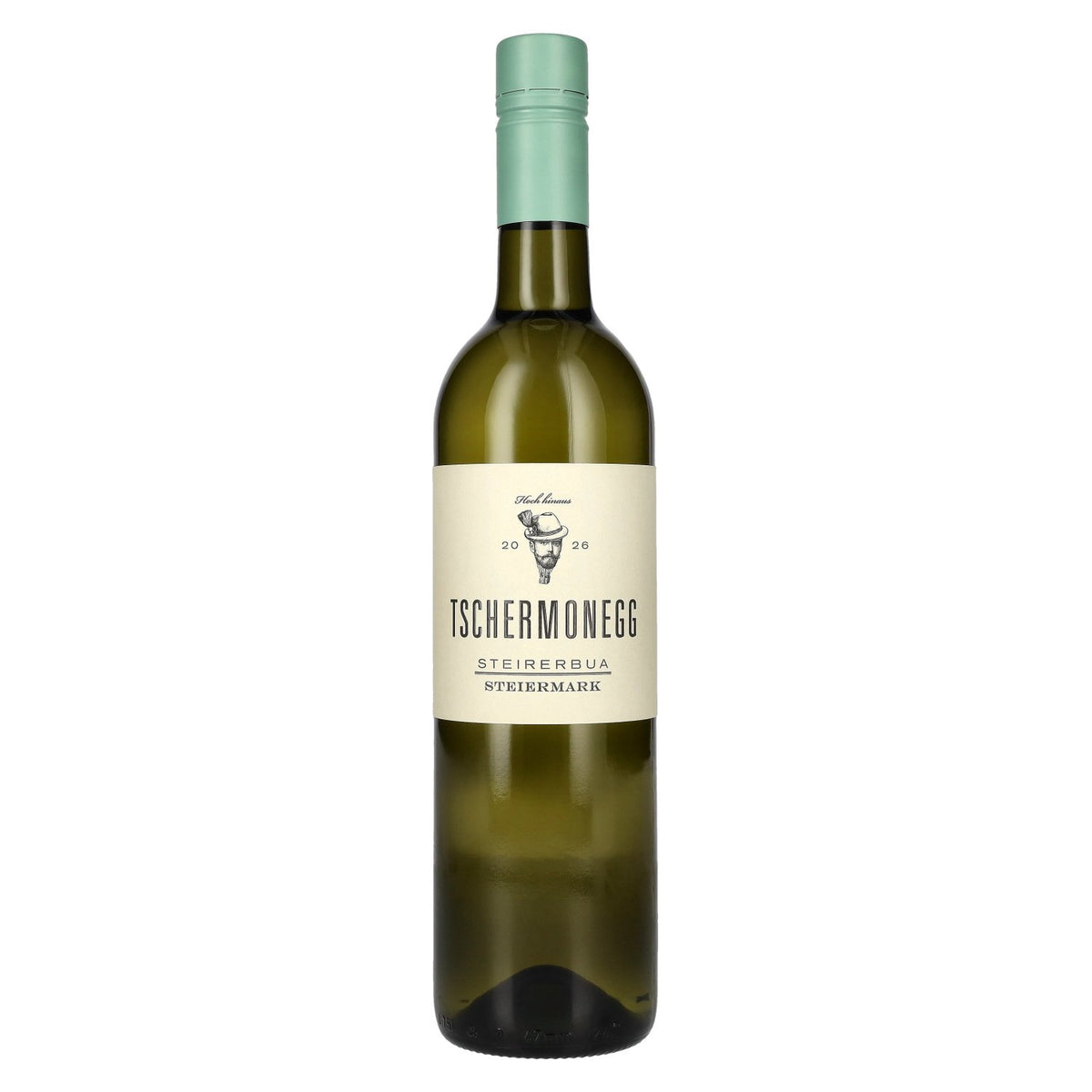
Tschermonegg Steirerbua Steiermark 2026 11,5% Vol. 0,75l
| Quantity | Discount | Discount Price |
|---|---|---|
| Buy 2+ | 5% | $38.24/each |
| Buy 3+ | 7% | $37.43/each |
| Destination | Shipping |
|---|---|
| USA & 🌍 Worldwide | ✔️ Available |
business days after shipment.
on every order.
Tschermonegg "Steirerbua" (Styria, 2026, 11.5% ABV) is a fresh, uncomplicated Austrian white wine blend from the long-established Tschermonegg estate. A harmonious combination of Müller-Thurgau, Pinot Blanc (Weissburgunder), Yellow Muscat (Gelber Muskateller), and Sauvignon Blanc, this wine brings together four classic white grape varieties to create a versatile, modern offering. The 2026 "Steirerbua" embodies authentic Styrian wine culture, representing an accessible style that is perfect for both everyday enjoyment and social gatherings. Meticulous vineyard management and the selection of healthy, high-quality grapes form the foundation for this extra-dry Austrian white wine, whose distinct character is shaped by the interplay of its various grape varieties.
During production, the Tschermonegg "Steirerbua" 2026 is aged in stainless steel tanks, a process that preserves the varietal characteristics of the blend. This gentle approach highlights the wine’s modern style, avoiding any dominant influence from oak. With an alcohol content of 11.5% and packaged in a 0.75-liter bottle with a screw cap, this Styrian white wine is ideal for relaxed, casual drinking and serves as a versatile companion to food. It has a recommended aging potential of up to five years, though its youthful, vibrant character makes it especially well-suited for early consumption. The "Steirerbua" from the Tschermonegg estate bridges the gap between regional heritage and a contemporary interpretation of Styrian white wine culture.