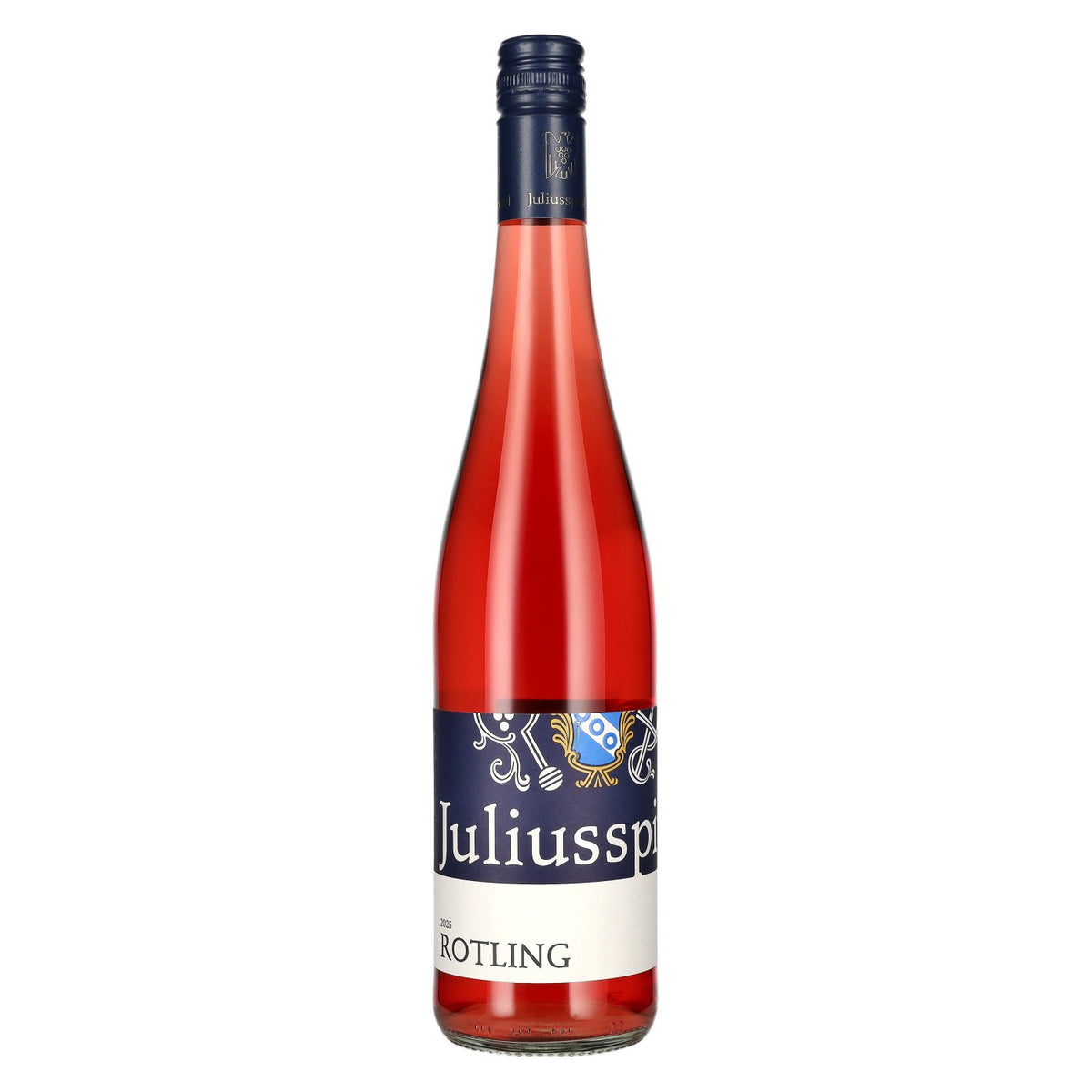
Juliusspital Rotling 2025 11,5% Vol. 0,75l
| Quantity | Discount | Discount Price |
|---|---|---|
| Buy 2+ | 5% | $35.98/each |
| Buy 3+ | 7% | $35.22/each |
| Destination | Shipping |
|---|---|
| USA & 🌍 Worldwide | ✔️ Available |
business days after shipment.
on every order.
Juliusspital Rotling 2025 11,5% Vol. 0,75l
The 2025 Juliusspital Rotling (11.5% ABV) is a distinctive, off-dry Franconian wine specialty from Germany, produced by the historic Juliusspital estate in Würzburg. This cuvée—a blend of the Domina, Müller-Thurgau, and Riesling grape varieties—is part of the renowned estate’s core wine range. Unlike a classic rosé, a "Rotling" is created by processing red and white grapes (or their musts) together, resulting in a unique, independent category of wine. As a German *Qualitätswein* (quality wine) from Franconia, the 2025 vintage is sourced from carefully selected vineyards within the Franconian wine-growing region. Juliusspital places a strong emphasis on nature-oriented viticulture, characterized by intentionally limited yields, thoughtful soil management, and the preservation of an intact ecosystem. The deliberate selection of specific vineyard plots forms the foundation for the individual character of this Franconian cuvée.
The production of the 2025 off-dry Juliusspital Rotling focuses on the gentlest possible handling of the grapes. A specialized grape-conveying system and careful pressing ensure the harvest is treated with the utmost care, followed by a slow, temperature-controlled fermentation at 16–18°C. The young wine is then left to rest on its fine lees in stainless steel tanks before bottling. The Juliusspital Rotling bridges the gap between traditional Franconian winemaking and a modern interpretation of this unique wine category. With an alcohol content of 11.5% in a 0.75-liter bottle, this off-dry Franconian "Rotling" (a rosé-like blend) from the 2025 vintage is particularly well-suited for summer occasions, social garden parties, and relaxed, informal moments of enjoyment. It reaches its peak drinking maturity within the first two years of harvest—that is, by around 2027.